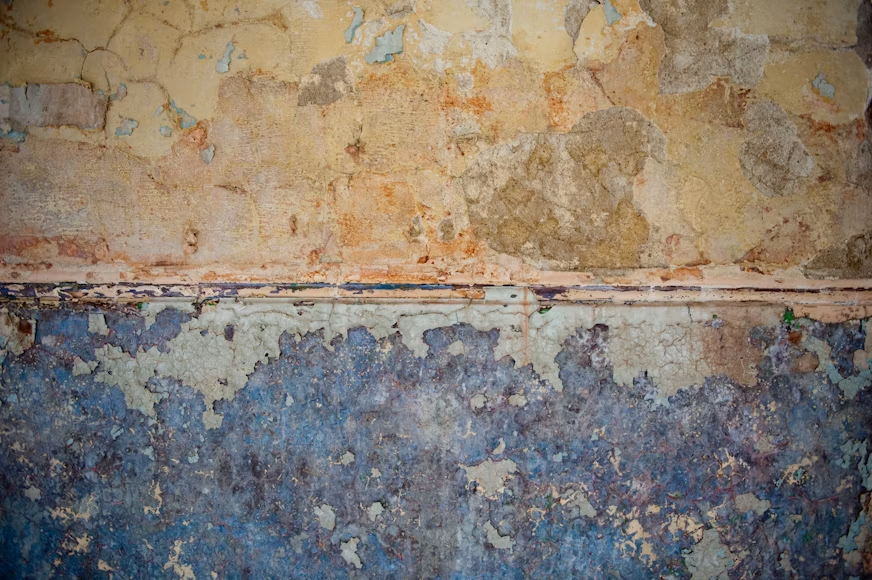
If you've searched "mold removal companies near me," you've probably noticed the same thing we hear from every new customer: the search results all sound identical. Everyone says "licensed," "certified," "fast response." The difference between a company that actually solves your mold problem and one that just makes it invisible for a few months comes down to a handful of specifics — and most homeowners don't know to ask about them until it's too late.
This guide walks through exactly what to check before you hire any mold removal company, and where the line is between a job you can do yourself and one that needs a licensed professional.
Signs you need more than a DIY clean-up
A small patch of surface mold on a bathroom tile is not the same problem as mold behind drywall or inside ductwork. Professional remediation is worth calling in when you notice:
Red flags that mean it's time to call a pro
A musty smell with no visible source
Mold is very likely growing behind a wall, under flooring, or inside your HVAC system.
Mold covering more than about 10 square feet
Past this size, the EPA and most state guidelines recommend professional remediation, not DIY cleaning.
Mold returning after you've cleaned it
Recurring mold means the moisture source was never fixed — a symptom a professional inspection is built to catch.
A recent leak, flood, or sump pump failure
Water intrusion events are the single biggest driver of mold calls we get across Green Bay.
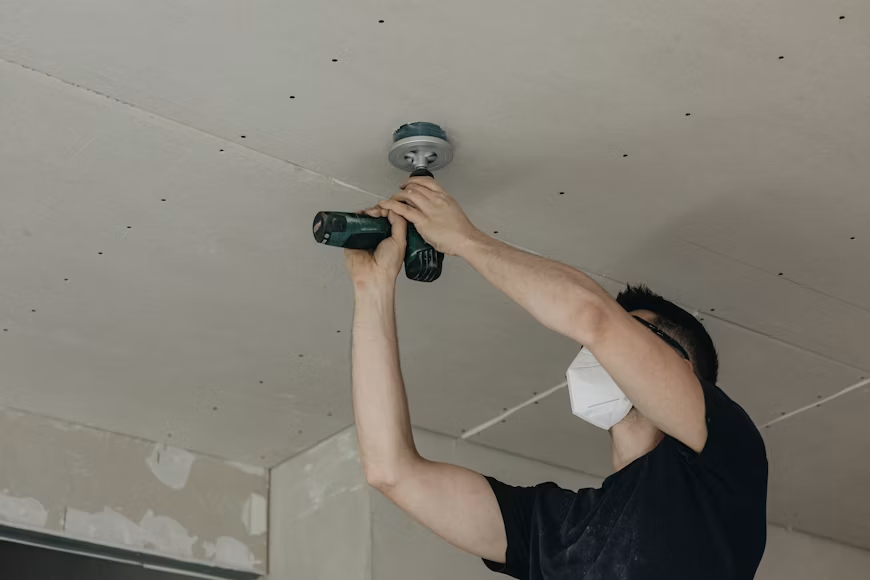
Testing, inspection, and removal aren't the same service
This is where a lot of homeowners get confused when comparing quotes, so it's worth being precise:
| Service | What it actually does | When you need it |
|---|---|---|
| Inspection | Visual assessment to locate mold and identify moisture source | Always the first step, even if mold is already visible |
| Testing | Air or surface sampling sent to a lab to confirm species/severity | When mold isn't visible but symptoms or smell suggest it's present |
| Removal / remediation | Containment, removal of affected material, treatment, drying | Once mold is confirmed and a scope of work is written |
A company that skips straight to removal without an inspection is a red flag
Without first identifying the moisture source, remediation is temporary — the mold typically returns within months. Any mold inspection and removal near you should always start with the inspection.
What our process looks like
Because it's a genuine sequence — each step depends on the last — here's exactly how a proper remediation job runs, from first call to final clearance:
Free inspection & moisture mapping
We locate every affected area and the moisture source causing it, not just what's visible.
Written scope and containment plan
You get a documented plan before any work starts — no surprise line items.
Containment and removal
Affected material is removed under negative-pressure containment to stop spores spreading to clean areas.
Drying, treatment, and clearance
Surfaces are treated and dried to target moisture levels, then verified before we call the job done.
Questions to ask any mold removal company near you
Before you sign anything, ask these directly — a legitimate remediation specialist will answer all of them without hesitation:
- Are you licensed and insured for mold remediation in Wisconsin?
- Do you test after remediation to confirm clearance, or just visually check?
- What's your containment method for the affected area?
- Is the moisture source being addressed, or only the visible mold?
- Is there a written warranty on the work?
Get a free, no-pressure inspection
We'll tell you honestly whether you need testing, remediation, or nothing at all — before you spend a dollar.
Call Green Bay Mold Removal Pro →
Frequently asked questions
How much does professional mold removal cost near me?
Most Green Bay area jobs run from a few hundred dollars for a small, contained area to several thousand for whole-basement or HVAC-involved remediation. Always get a written scope after an in-person inspection, not a phone quote.
What is the difference between mold testing, inspection, and removal?
Inspection locates and assesses the mold. Testing confirms species and severity through lab sampling when it isn't visually obvious. Removal is the physical remediation — containment, removal of affected material, treatment, and drying.
Can I just clean mold myself instead of hiring a company?
For a patch under about 10 square feet on a hard, non-porous surface, DIY cleaning can work. Anything larger, recurring, behind walls, or in HVAC ductwork needs a licensed remediation company to contain spores and address the moisture source properly.